
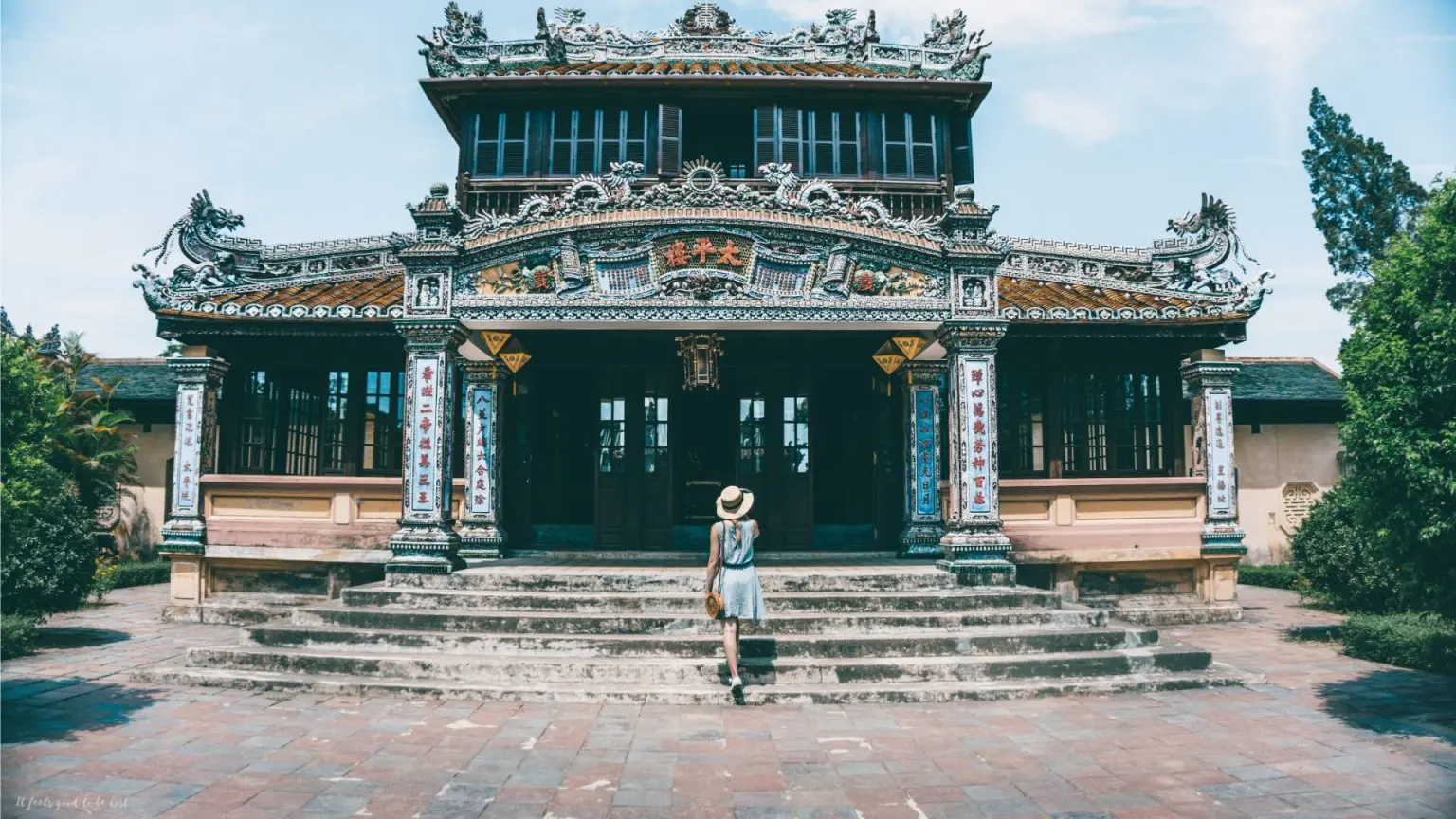
“Updated 2026: This post has been updated to reflect the current information and tips for your 3 week Vietnam itinerary. Enjoy planning your adventure!”
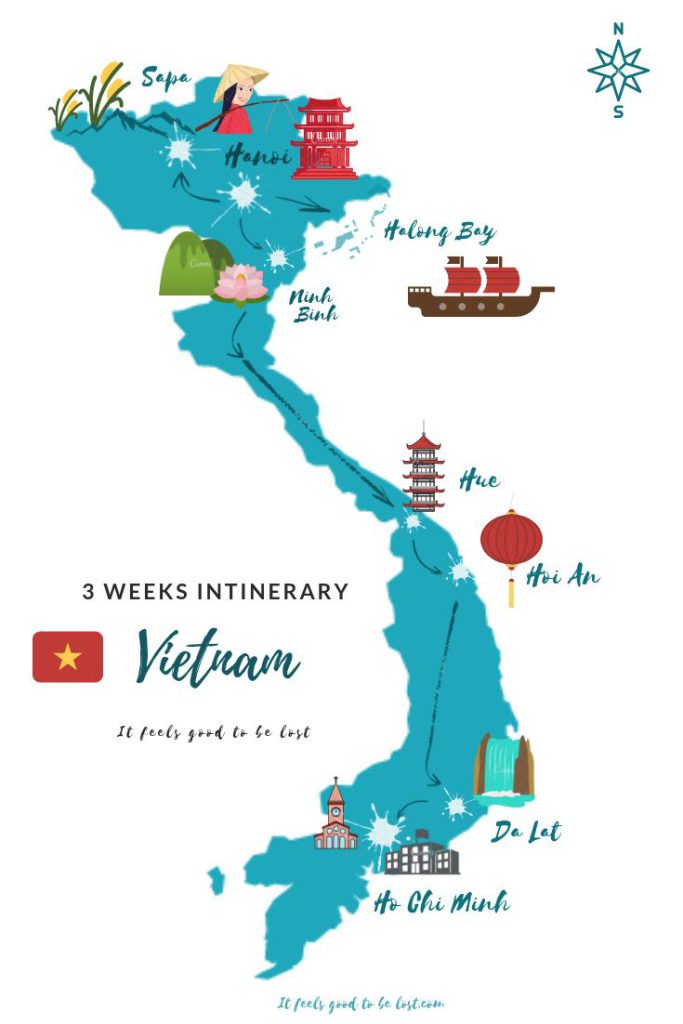
Planning a trip to Vietnam is an adventure filled with excitement. However, with Vietnam’s vast landscapes and rich culture, it can be challenging to decide how long to spend in each place to truly experience its charm. The good news for you is that we’re here to help you organise your 3 week Vietnam itinerary.
With our guide, you’ll go from north to south, but we have also included a summary for the South to North route below, so you can choose what works best for you. Worth mentioning, that we take our time when visiting places, as we don’t like visiting places just to put a tick on it.
How much money do I need?
The currency is the Vietnamese Dong. You’ll get about 23,000 Dongs for a Dollar.
Vietnam is a very cheap country, but it can also become expensive if you aren’t careful. Budget accommodations range between 15$ to 30$ per night, while food ranges between 2$ and 7$. If you take good care of your money, you can allocate a 30$ budget per day. A 50$ per day budget – or 1100$ for the 3 week trip – will make a great holiday though.
Visa information
An essential thing to double-check. Vietnam is more restrictive than other countries in South East Asia. Many nationalities get a 15-day visa on arrival, but others will need to apply for it before landing in Vietnam.
If for example, you want to follow our 3 week Vietnam itinerary, you’ll need to apply for a visa. You can do it online, taking 3 days and costing you 30$. If you don’t do your homework and you’re short on time, some companies will make a visa for you in even 15 minutes, but prepare the wallet…
Getting Around Vietnam
Vietnam is a long, thin country — roughly 1,650 km from north to south — so transport between cities is a major part of planning your itinerary. The good news: it’s well-connected, affordable, and easy to navigate once you understand the options.
Train
The Reunification Express runs the entire length of the country, with stops at all major cities. Trains are safe, comfortable, and offer beautiful scenery. For longer overnight routes (Hanoi to Hue, Hue to Da Nang), book a 4-berth sleeper cabin. Tickets cost $10–30 depending on the route and class. Book at least 3–5 days in advance — popular routes sell out fast. You can book online at 12go.asia.
Overnight buses
Sleeper buses (with fully reclining seats) are the go-to for routes trains don’t cover well, like Hanoi–Sapa or Da Lat–Ho Chi Minh. They cost $6–15 and save you a night’s accommodation. Stick to reputable companies: Phương Trang (FUTA Bus), Techbus, or Sapa O’Chau for the Hanoi–Sapa route.
Domestic flights
For stretches longer than 10 hours (Hanoi–Da Lat, or Hanoi–Ho Chi Minh at the end of a south-to-north trip), a domestic flight saves a full day. Vietnam Airlines, Vietjet, and Bamboo Airways all fly these routes. Prices start from $20–40 booked in advance — worth every cent when it replaces an exhausting overnight bus.
Grab app
Download Grab before you arrive — it’s Southeast Asia’s Uber and works in every major Vietnamese city. Use it for airport transfers and short hops around town to avoid taxi scams. It’s consistently three times cheaper than flagging down a taxi off the street (we paid $10 from Hanoi airport vs the $30+ quoted by taxis).
Best Time to Visit Vietnam
Vietnam’s weather is complex because the country is so long — each region follows a different climate pattern. Here’s a quick breakdown:
- North Vietnam (Hanoi, Sapa, Ha Long Bay): Best October–April. Summer (June–August) is hot and rainy. Sapa in December–February is cold and foggy, which some love for the atmosphere, but it limits trekking visibility.
- Central Vietnam (Hue, Hoi An): Best February–May. October–November brings heavy rain and flooding — avoid if you can.
- South Vietnam (Ho Chi Minh City): Best November–April (dry season). The wet season brings afternoon showers, but mornings are fine.
Our verdict for a 3-week north-to-south trip: March–May is the sweet spot — warm, mostly dry, and good across all regions. October is also excellent. Avoid July–August when prices spike and popular sites get crowded with both Vietnamese and Western holiday-makers.
South to North Route (Alternative)
If you are flying into Ho Chi Minh City or crossing from Cambodia, doing this itinerary from South to North is just as easy. Here is the reverse order:
- Ho Chi Minh City (2 nights)
- Da Lat (3 nights) - Take a bus from Ho Chi Minh.
- Hoi An (6 nights) - Fly from Da Lat to Da Nang (short taxi ride to Hoi An) to save time, or take a bus.
- Hue (1 night) - Bus or train from Da Nang/Hoi An.
- Ninh Binh (2 nights) - Overnight train or bus from Hue.
- Ha Long Bay (1-2 nights) - Bus from Ninh Binh.
- Sapa (2 nights) - Bus from Ha Long or return to Hanoi and take a train/bus.
- Hanoi (3 nights) - End your trip in the capital.
2-Week Vietnam Itinerary (If You Have Less Time)
Two weeks isn’t as leisurely as three, but you can still see Vietnam’s best. The key is being ruthless about trade-offs. Here’s how we’d structure a condensed 2-week Vietnam itinerary:
- Hanoi (2 nights) – Focus on the Old Quarter, Hoan Kiem Lake, and street food. Cut one day.
- Ha Long Bay or Sapa (2 nights) – Choose one, not both. Ha Long Bay is the classic Vietnam postcard; Sapa wins for culture and trekking. Read our Ha Long Bay vs Sapa guide to decide.
- Ninh Binh (2 nights) – Don’t skip this, even in 2 weeks. It’s compact, easy to get around, and the Tam Coc boat tour alone is worth the stop.
- Hoi An (4 nights) – Skip Hue or just pass through for half a day. Hoi An is the highlight of central Vietnam — give it the most time.
- Ho Chi Minh City (2 nights) – War Remnants Museum, Cu Chi Tunnels, and District 1 street food. A solid two-day sprint to finish.
This version drops Da Lat (which is harder to reach) and trims the north, but covers the absolute non-negotiables. If you can fly into Ho Chi Minh and out of Hanoi (or the reverse), you won’t waste any time backtracking.
Hanoi – 3 nights
Hanoi, the vibrant capital of Vietnam, is the first stop on our 3-week Vietnam itinerary. While exploring the city’s highlights in 2 days is possible, taking it easy can offer a deeper appreciation of Hanoi’s bustling life.
The capital of Vietnam is one of the most lively cities we’ve ever been to. People just pass their day sitting on the street and sipping (amazing!) coffee. You will see the worst traffic you’ve ever witnessed, but don’t let that put you off. Hanoi is a beautiful city full of lovely quarters, things to do, and new food to experience.
For extended information, check our detailed guide to Hanoi.
Must do things in Hanoi
- Roam around Hoan Kiem Lake. Visit Ngoc Son, a small temple in the middle of the lake.
- Wander around the Old and French Quarters.
- Visit the Ho Chi Minh mausoleum. It’s incredible how much respect the North Vietnamese have for their old leader.
- Visit Hoa Lo prison, colloquially known as “Hanoi Hilton”.
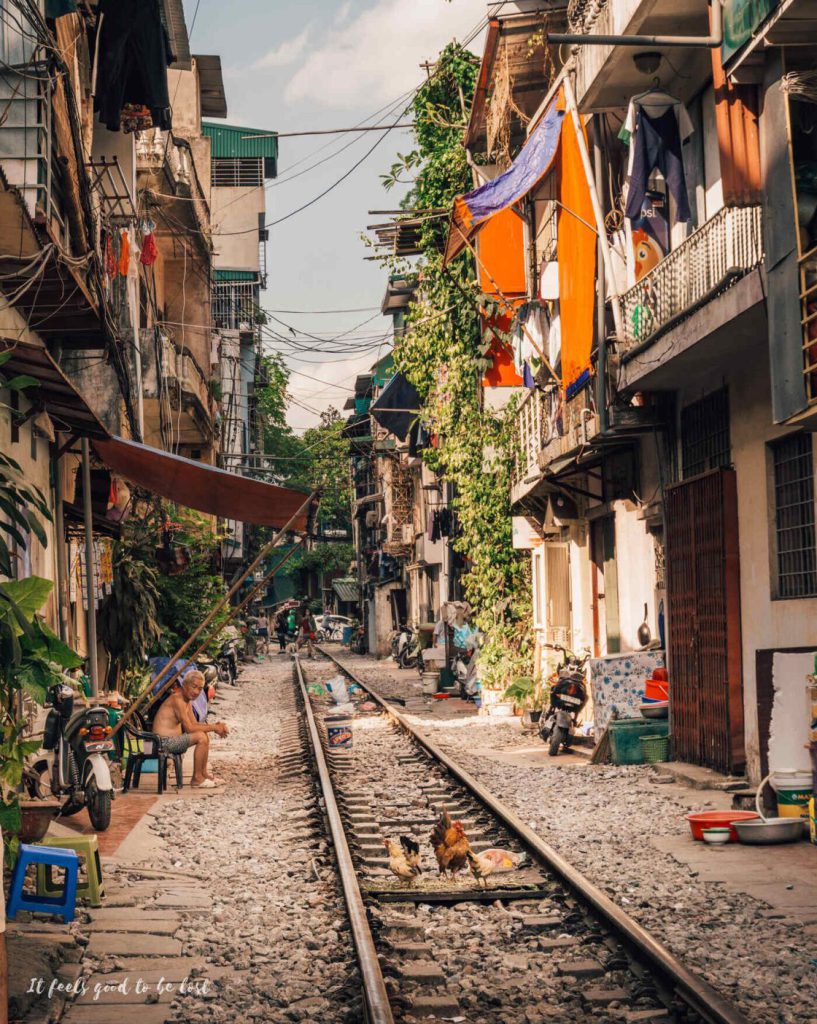
- See the train passing on the famous “Train Street”
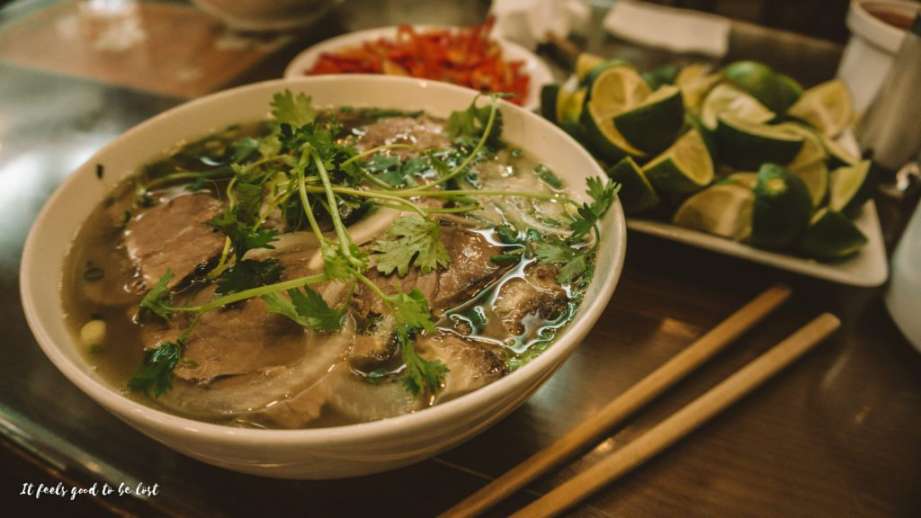
- We did a free food tour of Hanoi Free Walking Tours and it was amazing. The guides are students and they will take you to places that you would not go on your own. Great way to get you started with Vietnamese food.
Other things you could do in Hanoi
- Don Xuan Market. You can find pretty much anything here.
- Museum of Anthropology is especially interesting if you’re into finding out about the different tribes that live in the North of Vietnam.
- Water puppet theatre.
- Opera house.
TIP: If you get to Hanoi via plane, don’t take a creepy taxi to go to your hotel. Download GRAB. It costs us 10$ to go to the city center, 3 times cheaper than the price the taxi drivers offer.
Where to stay in Hanoi
Budget option: Old Quarter View Hanoi Hostel
Located in the heart of the Old Quarter, it is the perfect hostel for backpackers. Comfort and value at the same time, it has options for under 10$ a night, breakfast included.
Comfort option: Hanoi La Selva
Great facilities and lovely staff at a very reasonable price. Gorgeous rooms and located in the Old Quarter, next to Hoan Kiem Lake.
Sapa -2 nights
TIP: You can avoid paying for one night of accommodation by taking a very comfortable night bus.
The landscapes of the very north of Vietnam are a must-see and you shouldn’t miss them. The easiest place to visit is Sapa, this comes at a cost though. We’ve heard Sapa can be very touristic and a bit fake. However, if you’re clever and book the right trekking, your experience will have nothing to do with that.

Must do things in Sapa
- Trek to a hill tribe village. This is the whole point of Sapa. Skip the heavily touristed group tours and book something that takes you off the main paths. The hill tribes (H’mong, Red Dao, Tay) are welcoming and their villages are stunning.
- Homestay with a local family. One of the most memorable travel experiences we’ve had anywhere in the world. You eat with the family, sleep in their home, and get a completely different perspective on Vietnam.
- Fansipan peak. At 3,143 m, it’s the highest mountain in Southeast Asia. You can hike up (2–3 days) or take the cable car for a quick summit. The views on a clear day are extraordinary.
- Sapa town market. Best in the early morning when local hill tribe communities come to sell and trade. A very different side of Vietnam from the cities.
Our Trekking
We booked a trek called “Off the beaten track” with Sapa O’Chau — a social enterprise run by a local H’mong woman — and it was one of the best travel experiences we’ve ever had. Highly recommended over the big tourist operators.
TIP: Take the overnight bus from Hanoi (departs around 10 pm, arrives 5–6 am). It saves you a night’s accommodation and the bus is surprisingly comfortable.
Where to stay in Sapa
Budget option: Sapa O'Chau
Sapa O’Chau is also a humble hotel. You can stay here the night before/after your trekking. The rooms are clean and quite cheap, so it has good value.
Comfort option: Eco Palms House Retreat
For those looking for an eco-retreat. Bungalows in the middle of rice fields with amazing views of the mountain. You can also appreciate the views while sipping wine in a bathtub.
Ha Long Bay – 1 or 2 nights

Our 3 week Vietnam itinerary would not be complete without a visit to Ha Long Bay, one of the highlights of every visitor to Vietnam. A boat cruise will take you around the Bay for 1 or 2 nights, depending on how long you choose to stay. We’re budget travelers, so we chose 1 night. Most of the companies will include transportation from Hanoi to Ha Long Bay in the price.
If you're short on time, deciding between the two can be tough. We've written a detailed guide on whether to choose Ha Long Bay or Sapa to help you decide.
TIP: Boats usually spend the night in Ha Long Bay, meaning you end up sharing the night with hundreds of boats. Some cruises take a slightly different route, sleeping in Bai Tu Long Bay. This will make your experience MUCH BETTER. Our sunset was unforgettable.
Our choice
We took the package called “Off the beaten track” offered by Indochina Junk. With this option, you’ll spend the night in Bai Tu Long Bay.
Ninh Binh – 2 nights
We get to Ninh Binh via a comfortable train from Hanoi. Riding a bike through the countryside rice fields of Ninh Binh – also called Ha Long Bay on land – will be one of the highlights of your trip and a must-stop on your itinerary.
Must do things in Ninh Binh

- Tam Coc Lake tour. One hour stroll in a small boat. The landscape is very similar to Ha Long Bay but a hundred percent worth it.
- Bich Dong Pagoda
- Bird Valley
- Mua cave. The cave is the least important thing, make sure you hike the mountain to get the perfect views!
TIP: Rent a bike and cycle everywhere. The roads are very safe and the views deserve to be appreciated. You won’t get the same experience using Tuk Tuks or motorbikes.
For extended information, check out our detailed Ninh Binh Travel Guide.

Where to stay in Ninh Binh
Comfort option: Tam Coc Horizon Bungalow
Outstanding bungalows surrounded by amazing landscapes. The atmosphere and the staff are both simply incredible. Probably one of the best places to stay in Ninh Binh.
Hue – 1 night
We got to Hue by night bus from Ninh Binh. Be aware the bus wasn’t particularly safe, nothing to do with the one we took to go to Sapa.
Hue is Vietnam’s former imperial capital — it’s more layered and historical than most cities on the trail. We got there by night bus from Ninh Binh (not the most comfortable journey, fair warning), but a train from Hanoi works better if you book ahead.
Honestly, Hue is the one place we’d trim if we were tight on time — but don’t skip it entirely. Even one full day here is worth it.
Must do things in Hue
- The Imperial Citadel. A massive walled complex that was the seat of the Nguyen dynasty for over a century. Atmospheric, well-preserved, and genuinely interesting even if you’re not a history buff.
- Royal tombs. Several emperors’ tombs are scattered around Hue — Tu Duc and Minh Mang are the most impressive. Rent a motorbike and visit 2–3 in an afternoon.
- Thien Mu Pagoda. A seven-storey pagoda on the banks of the Perfume River. Beautiful at sunset.
- Hue cuisine. Hue food is its own thing — spicier and more complex than the rest of Vietnam. Try bún bò Huế (spicy beef noodle soup) and bánh khoái (crispy rice pancake) at a local market stall.
- Night market on the Perfume River. Great place for dinner and a stroll in the evening.
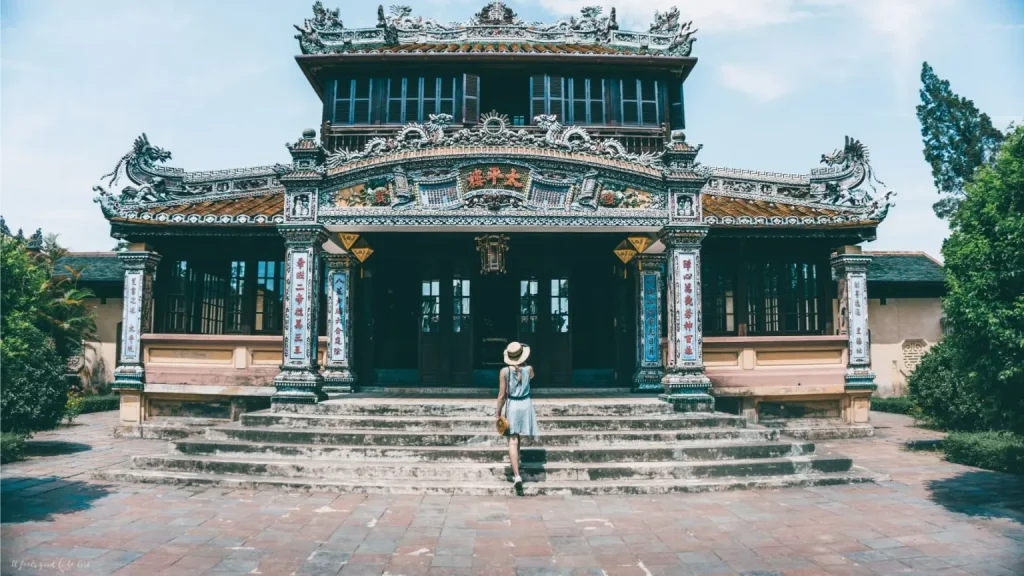
Must do things in Hue
- Hue Citadel and Forbidden City
- Walk stroll next to the river. There are many markets and restaurants
Where to stay in Hue
Budget option: Bonjour Hostel
Well located, very clean, and offers rooms under 10$ the night depending on the dates. Delicious breakfast included! Just has tremendous value.
Comfort option: The Scarlett Boutique Hotel
Very affordable luxury rooms (about 50$ the night). One of the most visited and prestigious hotels in Hue, you can’t go wrong with it.
Hoi An – 6 nights

Continuing our 3 week Vietnam itinerary, we’ll get to Hoi An. To get to this gem town, we strongly recommend the train if you come from Hue. It goes next to the Hai Van Pass, a 21 km mountain pass with beautiful views of the sea.
Without a doubt, Hoi An is our favorite city in Vietnam. With its pristine beaches, lush rice fields, and a beautiful old town illuminated by lanterns, Hoi An offers a unique blend of natural beauty and cultural heritage that we found truly captivating.
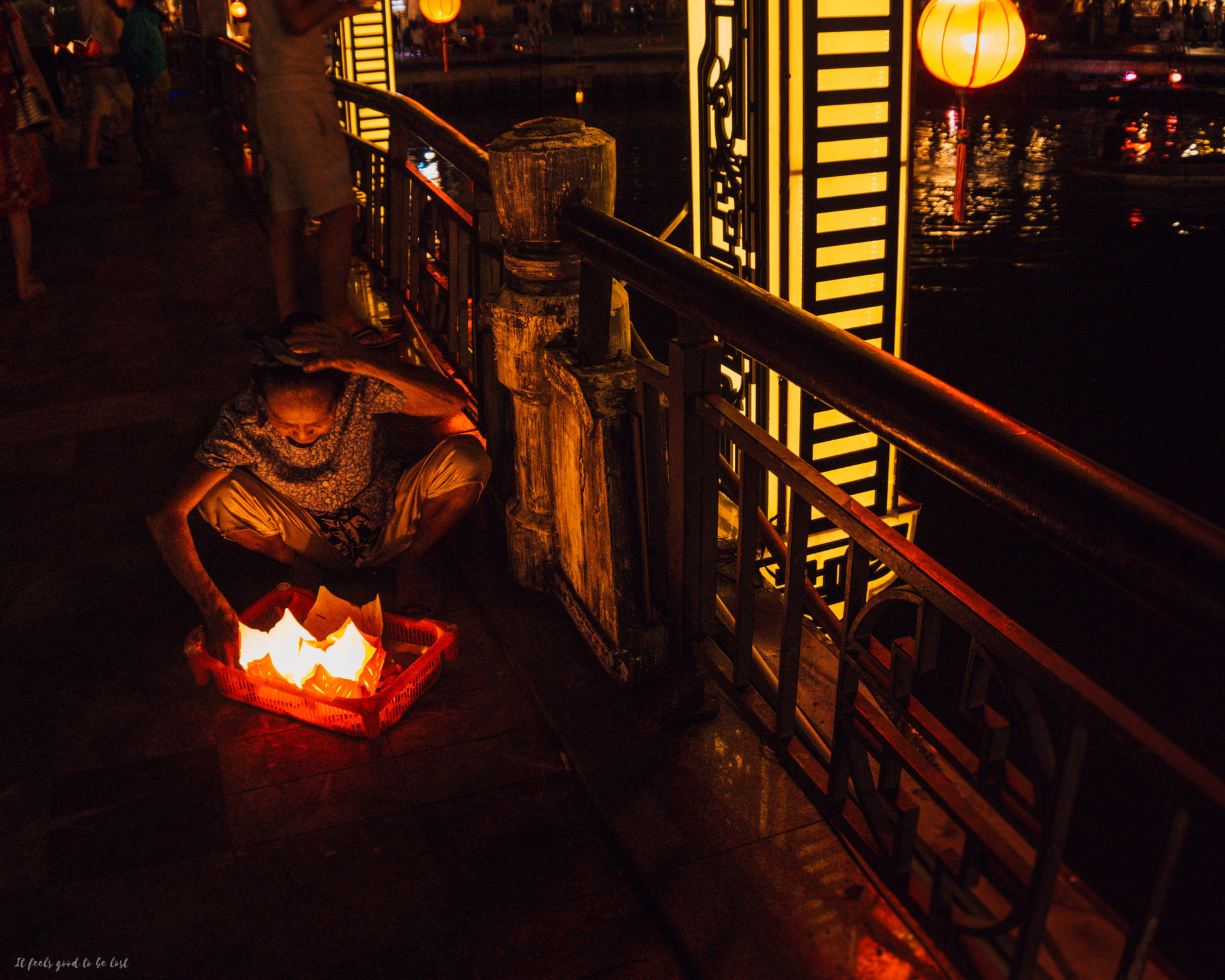
Must do things in Hoi An
- An Bang beach. A relaxing beach with very good and tasty restaurants. Also, you can go parasailing for 30$ 2 people. Unique experience.
- The old town at night. Have a stroll in the old town at night, when all the lanterns are on. Simply beautiful.
- No better city to buy souvenirs. We bought a few too many lanterns (but we don’t regret it!).
- Ride a motorbike around Hoi An. We’ll never forget the joy of riding the motorbike from the city center to the beach, passing next to the rice fields.
Other things you could do in Hoi An
- Ancient town tour. Old houses, museums, Japanese covered bridge, etc.
- Marble Mountains, halfway between Da Nang and Hoi An.
TIP: Motorbike is a must in Hoi An. The roads are good and traffic is more “western” than in other places of the country. Another plus: you won’t have to deal with tuk-tuk or taxi drivers.
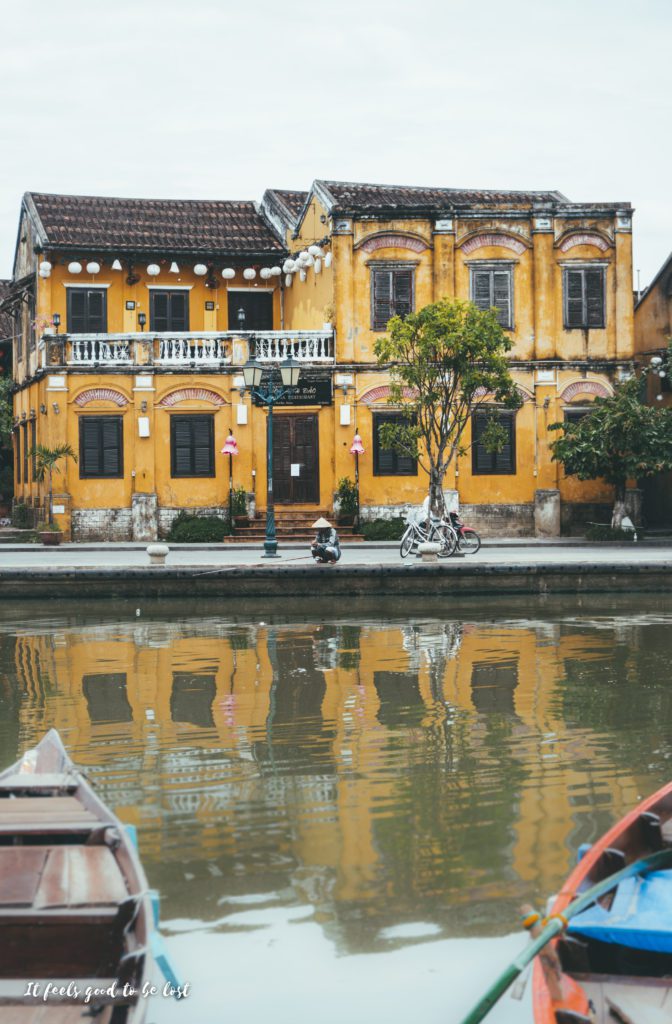
Where to stay in Hoi An
Budget option: Melody Boutique Villa Hoi An
Modern construction, clean, fresh, and very comfortable. The staff is amazing and will help you with anything you need. Bicycles and scooters are available for rental at very affordable prices. Amazing value (rooms under 15$ the night).
Comfort option: Little Town Villa
Luxury but affordable villa in the old town. Spacious rooms and tasteful decoration. The breakfast is great, with both local and international options. Swimming pool to cool down after a long walk around the old town.
Da Lat – 3 nights
As we continue our 3-week Vietnam itinerary, it’s time for an exhilarating adventure! Da Lat, renowned for its rolling hills, verdant forests, and stunning waterfalls, is an unmissable destination for nature lovers.
Must do things:
- Rapelling waterfalls
- Visiting Pongour Falls
Where to stay in Da Lat
Comfort option: Doc May Boutique Villa
A little boutique place at an exceptional price. The villa location is great and you can walk or cycle pretty much anywhere, including the night market.
Ho Chi Minh – 2 nights
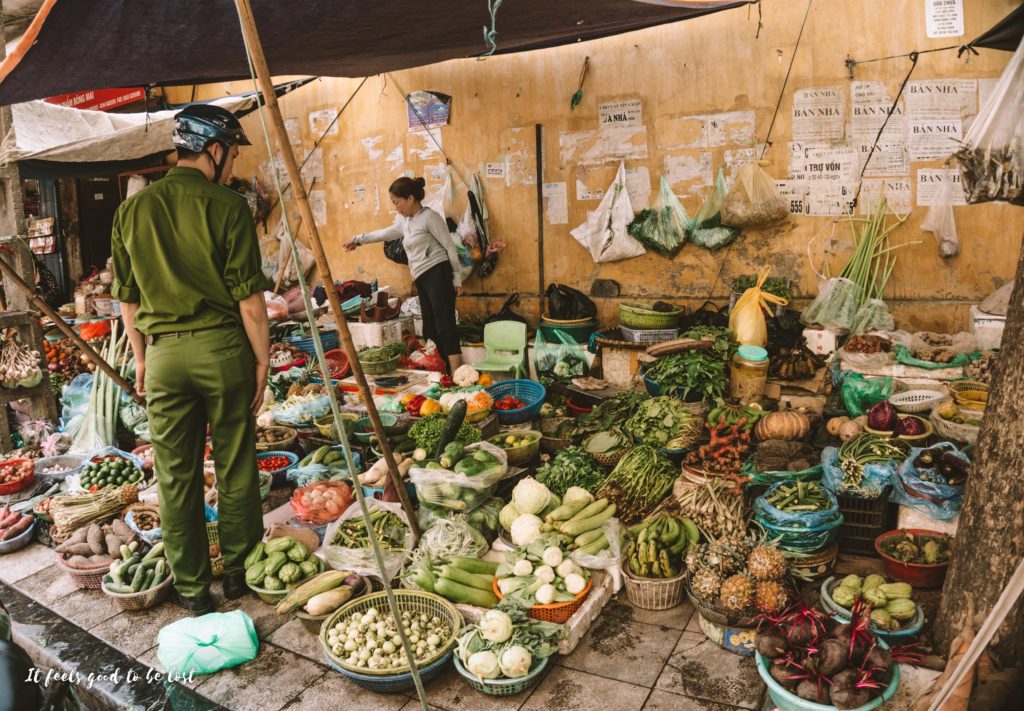
The last stop of our 3-week Vietnam itinerary is Ho Chi Minh City, also known as Saigon. We stayed 2 nights and it was just the right amount — enough to feel the city without rushing.
Saigon hits differently from Hanoi. It’s louder, faster, more modern, and the traffic is something else. But it’s also full of great food, fascinating history, and a nightlife scene that goes very late. The contrast with the north is striking — by the time you get here after three weeks, you’ll feel how much Vietnam has changed as you travelled south.
Must do things in Ho Chi Minh
- War Remnants Museum. One of the most powerful museums we’ve visited anywhere. Heavy but essential — it gives you a completely different perspective on the Vietnam War. Don’t skip it.
- Cu Chi Tunnels. An incredible network of underground tunnels used by the Viet Cong during the war. You can crawl through some of the tunnels yourself. Check out our post on how to visit the Cu Chi Tunnels without a tour — it’s easy and much cheaper.
- Walk around District 1. The historic heart of Saigon. Visit the Reunification Palace, Notre-Dame Cathedral, and the Central Post Office — all within walking distance of each other.
- Ben Thanh Market. Touristy but fun for a browse and some street food. Go early morning for the best experience before the tour groups arrive.
- Eat everything. Saigon’s food scene is world-class. Don’t leave without trying bún thịt nướng (grilled pork noodles) and bánh mì from a street cart.
TIP: If you want to visit Cu Chi Tunnels, check out our post on how to visit Cu Chi Tunnels without a tour.

Where to stay in Ho Chi Minh
Budget option: Couchsurfing with Saigon English Adventures
We did Couchsurfing with Saigon English Adventures English Academy and loved it. You get to stay for free in exchange for being part of some English classes, where you will meet amazing locals. Honestly, this was the nicest experience we’ve had in Vietnam.

Other places you could visit in Vietnam
- Ha Giang. Not including this one in our 3 week Vietnam itinerary hurt. This province is in the North of Vietnam, next to the Chinese border. This is a less touristic alternative to Sapa. Unfortunately, you should do it only if you have around 4-5 days, as it is very remote and takes some time to get there.
- Nha Trang. A coastal resort city in Southern Vietnam known for its beaches. From what we read, it is very touristy in a bad way (dirty beaches, parties, etc).
- Phong Nha national park. Mountains, forests, rivers, and caves. Good trekking and good adventures from our friends’ experiences!
Where to go next?
If you have more time in Southeast Asia, a popular next step is crossing into Cambodia. You can easily take a bus from Ho Chi Minh City to Phnom Penh or Siem Reap. Check out our guides to help you plan:
- Crossing the Cambodian Border: A Guide to Poipet & Aranyaprathet
- Cycling Angkor Wat (2026): An Unforgettable Adventure & Guide
You might find interesting…
- Travel to Singapore on a budget
- 1 Week Jordan Itinerary: Dead Sea Mystique to Desert Dreams
- Van Life in Cabo de Gata: Exploring Andalusia’s natural gem
Frequently Asked Questions: 3-Week Vietnam Itinerary
How much money do I need for 3 weeks in Vietnam?
A budget of $50/day (or $1,100 total) makes for a great trip. Budget accommodation runs $15–$30/night and meals $2–$7. Stick to street food and local transport and you can do it on $30/day.
Do I need a visa for a 3-week Vietnam trip?
Most nationalities only get a 15-day visa on arrival, so for 3 weeks you'll need to apply in advance. The e-visa takes 3 days and costs $30 — sort it before you fly.
Is it better to travel Vietnam North to South or South to North?
Both work equally well. North to South (Hanoi → Ho Chi Minh) is the most popular. Reverse the itinerary if your flights work out better that way — nothing changes except the order.
Is 3 weeks enough to see Vietnam?
Yes — 3 weeks is the ideal amount of time. You can cover all the highlights from Hanoi in the north through Hue and Hoi An down to Ho Chi Minh in the south without feeling rushed.
What is the best route for a 3-week Vietnam itinerary?
Hanoi (3n) → Sapa (2n) → Ha Long Bay (2n) → Ninh Binh (2n) → Hue (1n) → Hoi An (6n) → Da Lat (3n) → Ho Chi Minh City (2n). Reverse it if you fly into Ho Chi Minh.
What is the best time to visit Vietnam?
For a full north-to-south trip, March–May is the sweet spot: mostly dry and warm across all regions. October–November also works well. Avoid July–August (crowded, expensive, rainy in the north).
Can I do Vietnam in 2 weeks?
Yes. With 2 weeks: Hanoi (2n) → Ha Long Bay OR Sapa (2n) → Ninh Binh (2n) → Hoi An (4n) → Ho Chi Minh City (2n). Drop Hue and Da Lat, consider a domestic flight to save time.